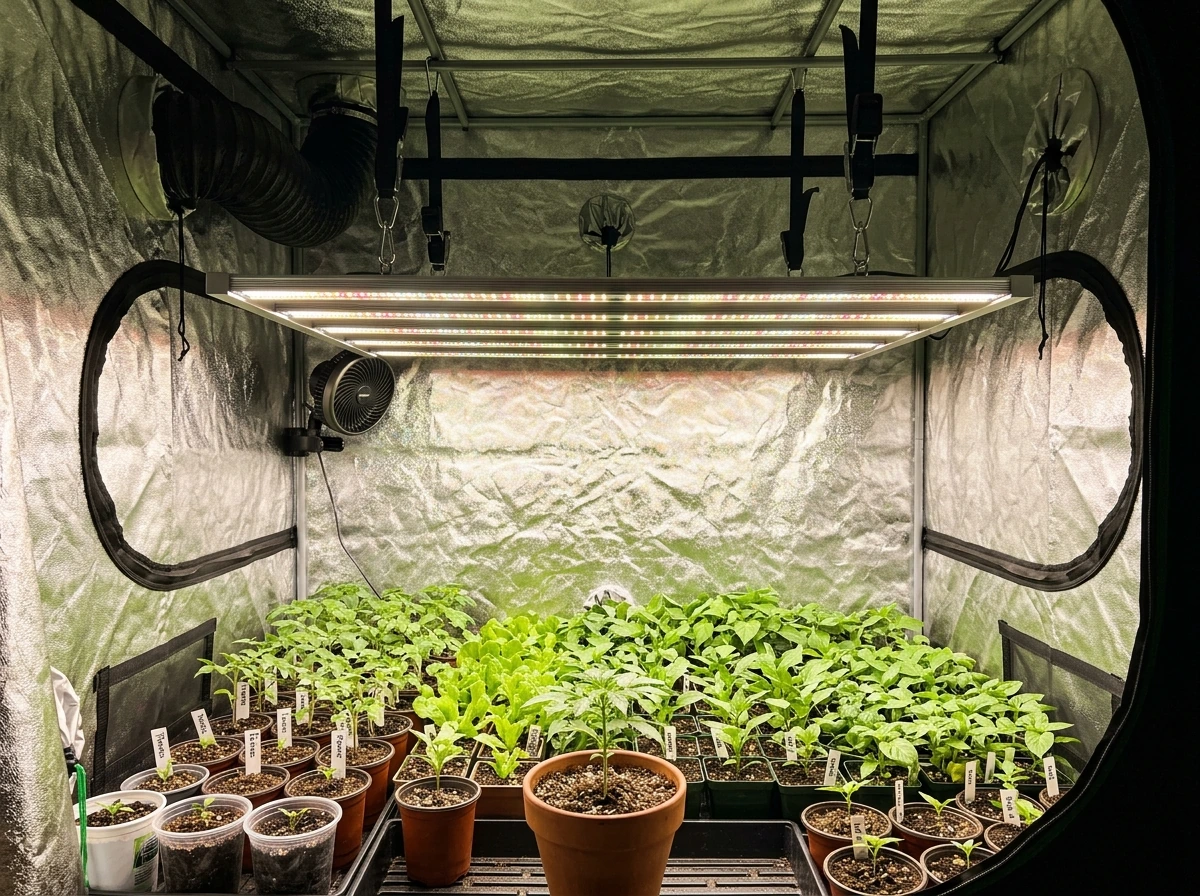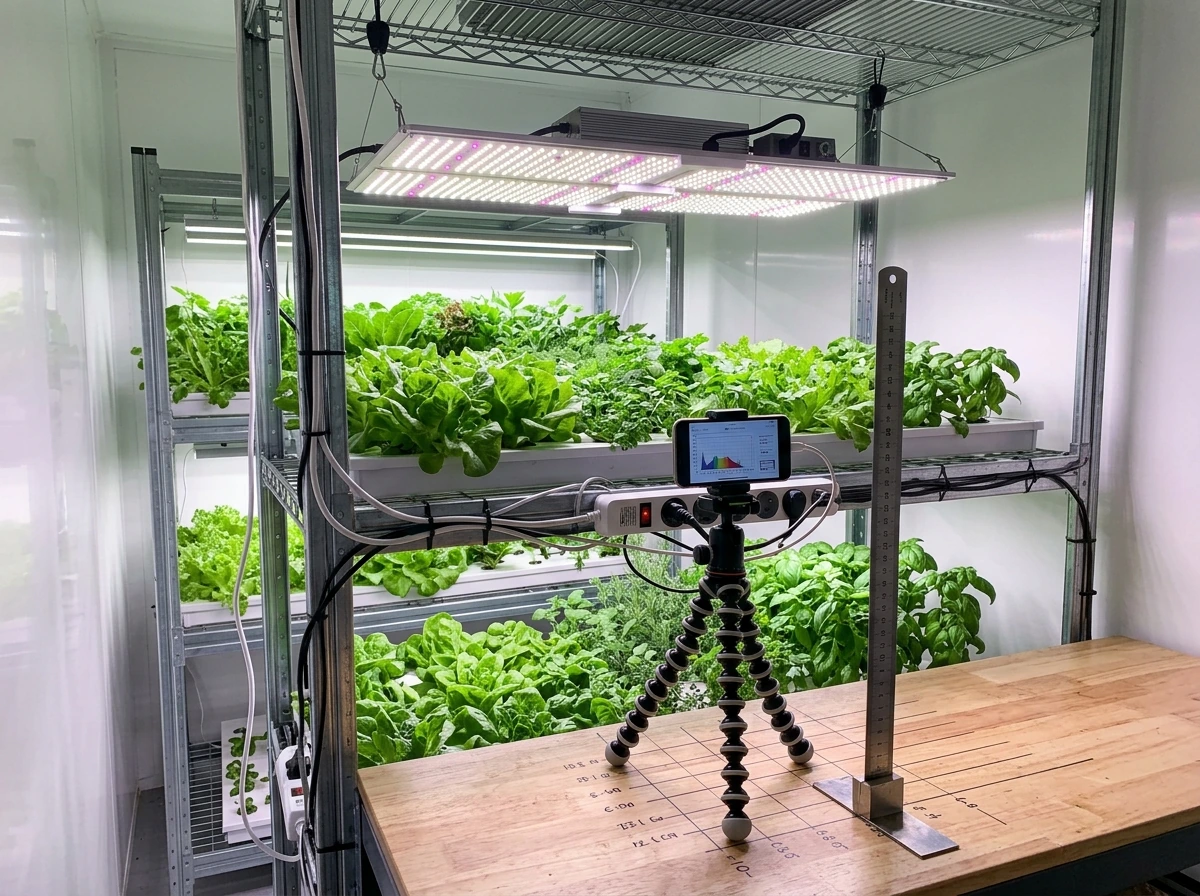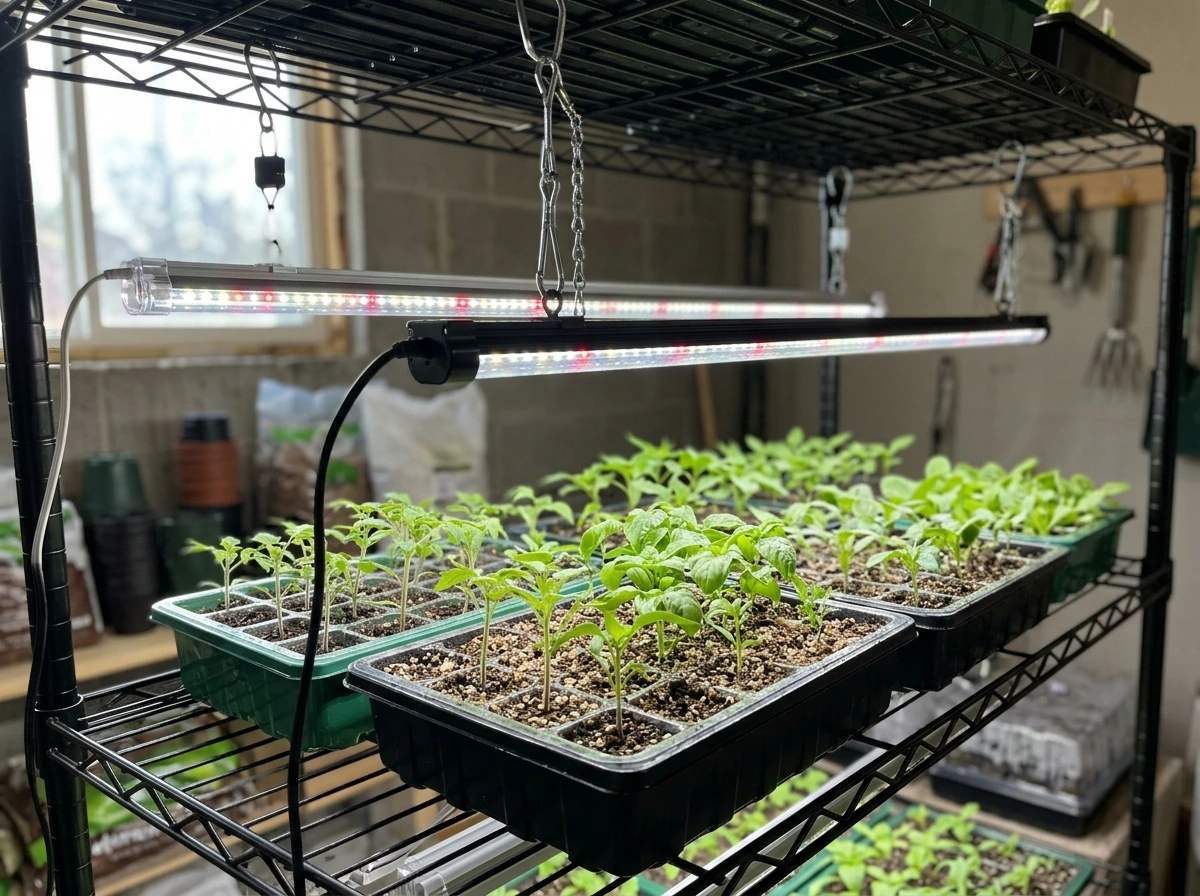
If you searched 'grow laser cap reviews' hoping to find a laser-based grow light for your indoor garden, there's something important to clear up first: the 'Grow Laser Cap' is not a plant grow light. It's a hair-loss treatment device. Before you spend money on the wrong product, here's exactly what it is, why it keeps showing up in searches, and what indoor gardeners should actually be looking at instead.
Grow Laser Cap Reviews: Setup, Performance, and Best Options

Marcus Caldwell
24 Mar 2026
What a Grow Laser Cap Is and How It's Used
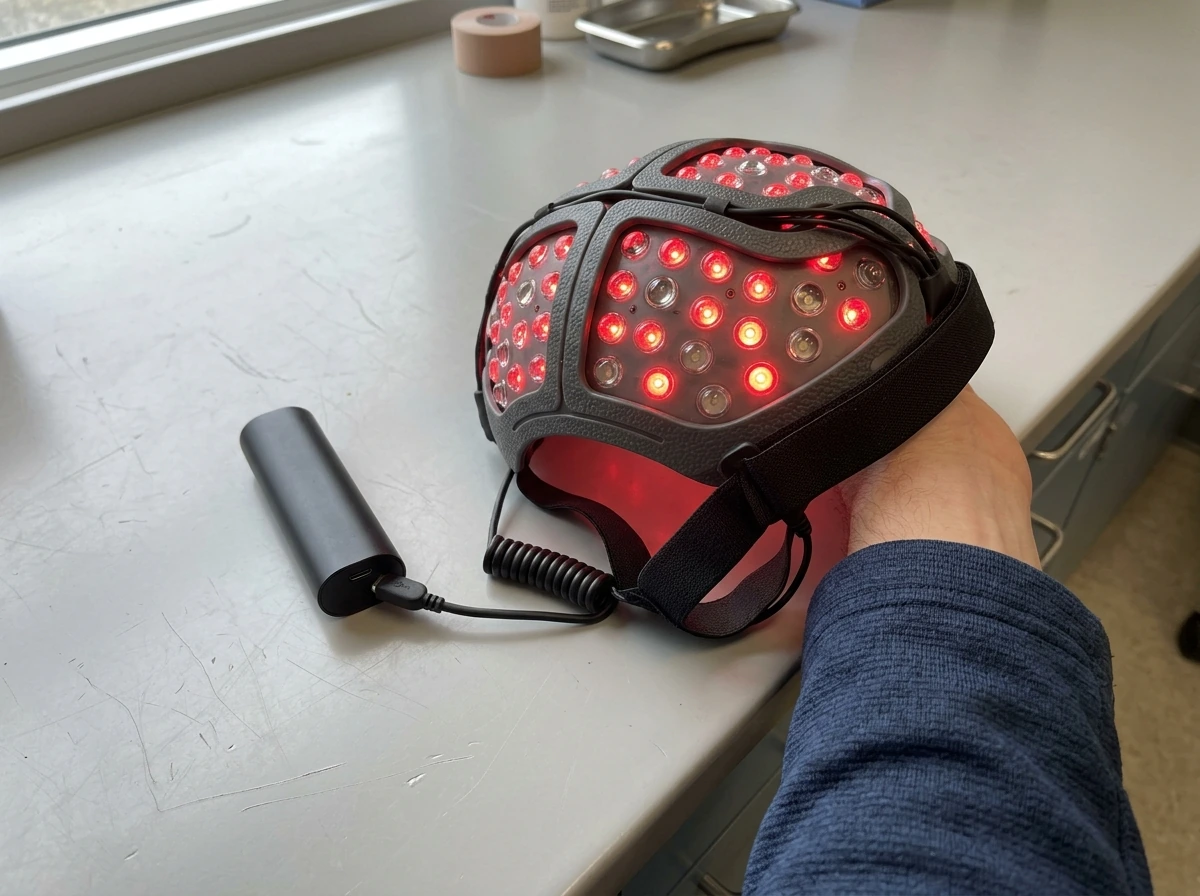
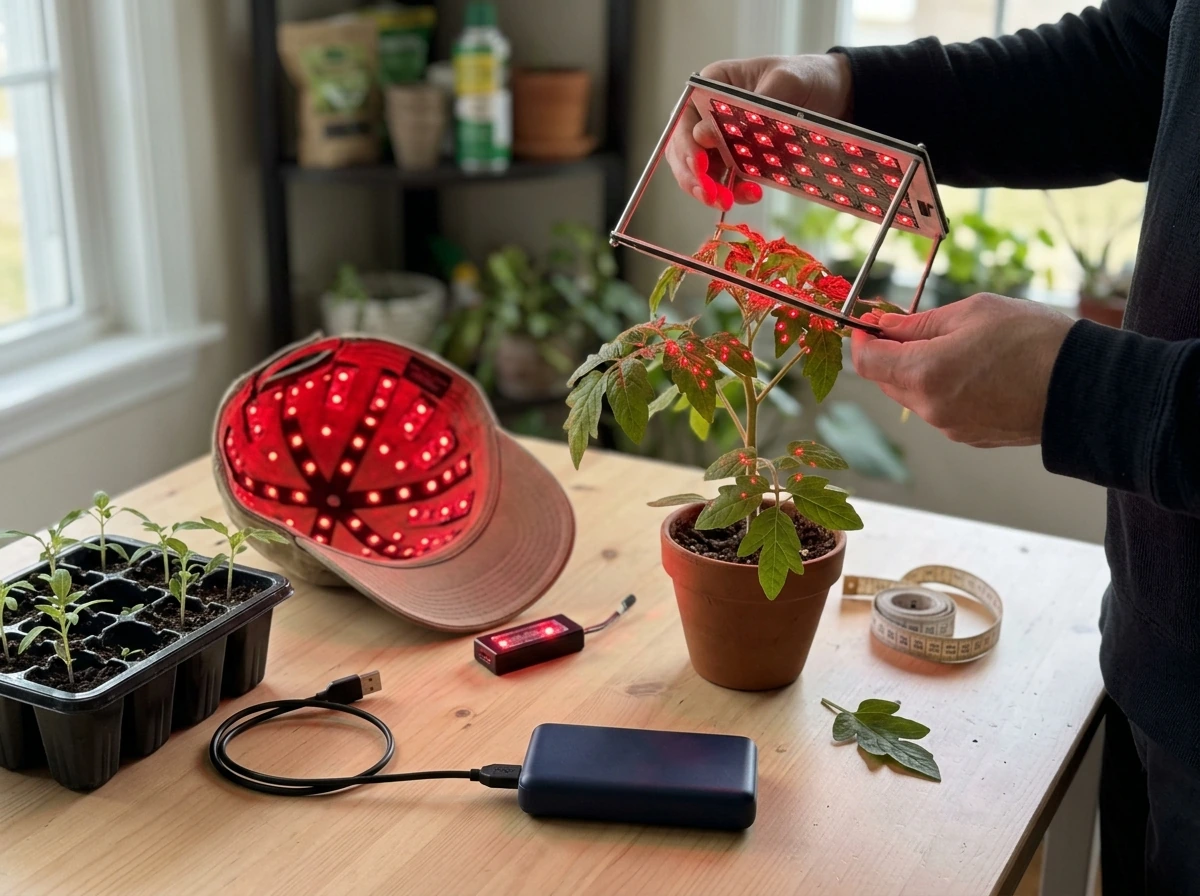
The Grow Laser Cap is an FDA-cleared low-level laser therapy (LLLT) device, also called photobiomodulation (PBM), designed to stimulate hair follicles in people experiencing hair loss. You wear it like a baseball cap. It emits 650 nm red laser light from an array of small diodes embedded in the cap's interior, and the light penetrates the scalp to a depth of roughly 3 to 5 mm, which is enough to reach hair follicle tissue. The standard model uses 280 laser diodes at 5 mW each, producing a total output of 1,400 mW and a fluence of 3.78 J/cm². A higher-end model called the Proflex 302 bumps that to 302 diodes, 1,510 mW total, and 4.08 J/cm². There's also a smaller 147-diode entry-level version. Typical treatment is three 30-minute sessions per week, and the cap powers off automatically. It runs off a power bank or AC adapter, not a grow-light driver.
This is a regulated medical laser device, not a horticultural product. The FDA classifies it under laser hair-growth devices, and it publishes no PPFD, PAR, or photosynthetic metrics whatsoever, because it has nothing to do with plant photosynthesis. The name 'Grow Laser Cap' is a brand name where 'grow' refers to growing hair, not plants. This distinction matters a lot if you're an indoor gardener who ended up here by accident.
Laser Grow Light Performance: Coverage, Penetration, and Results (for Plants)
Since this site focuses on grow lights for plants, let's address what laser-based technology actually offers in a horticultural context, and whether 'laser cap' style products have any real-world role in an indoor grow.
Laser diodes at 650 nm do fall within the red absorption peak that chlorophyll a and b respond to. In that narrow sense, the wavelength is not wrong for plant use. But the similarity ends there. A hair laser cap delivers roughly 1.4 to 1.5 watts of total optical output spread across a scalp-sized area. A decent LED grow panel, by contrast, delivers hundreds of watts of broad-spectrum light with PPFD values in the range of 600 to 1,200+ µmol/m²/s at canopy level. The laser cap produces no meaningful PAR output for plant photosynthesis. It has no blue spectrum (430 to 450 nm), no green, no far-red, and the total power is orders of magnitude below what even a single seedling tray needs to thrive.
Foliage penetration is another consideration. LLLT devices are engineered to penetrate 3 to 5 mm of scalp tissue. Dense plant canopies, even for smaller herbs, require light to scatter across multiple layers of leaf tissue. There is no published data showing laser cap devices driving meaningful photosynthetic response at canopy depth. If you are evaluating a laser-style grow light product for plants, you need PPFD measurements at the canopy, not fluence ratings in J/cm² designed for skin therapy.
Reviews and Comparisons: Best Options by Grow Space and Budget
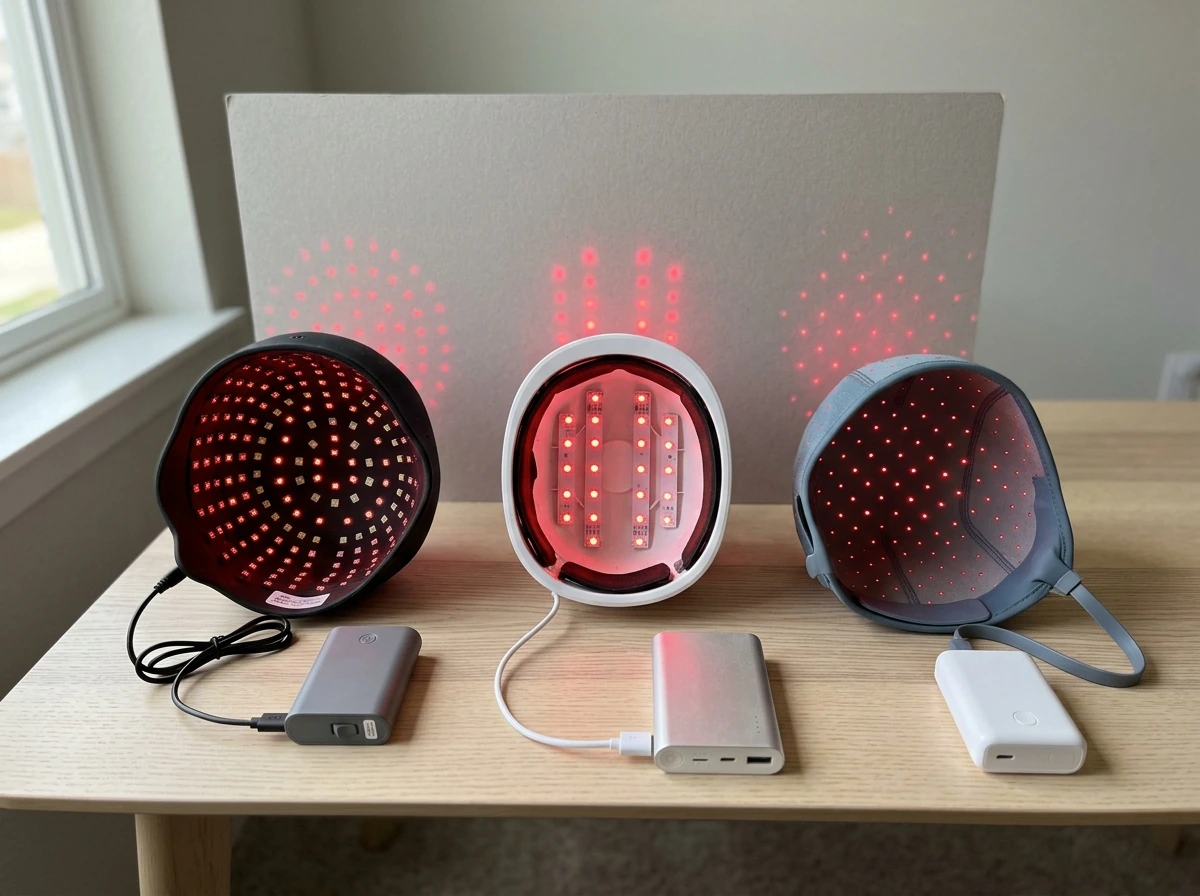
If you arrived here looking for a grow light for your indoor garden, here is a direct comparison of what the 'grow laser cap' devices actually are versus what you likely need. Use this to calibrate your search.
| Product | Diodes | Wavelength | Total Output | Intended Use | Plant-Grow Suitability |
|---|---|---|---|---|---|
| Grow Laser Cap 280 | 280 lasers | 650 nm | 1,400 mW | Hair loss LLLT | None |
| Grow Laser Cap 147 | 147 lasers | 650 nm | ~735 mW | Hair loss LLLT | None |
| GrowPro Proflex 302 | 302 lasers | 650 nm | 1,510 mW | Hair loss LLLT | None |
| Illumiflow 148 | 148 lasers | 650 nm | ~740 mW | Hair loss LLLT | None |
| Capillus Spectrum | Undisclosed | 808 nm IR | Undisclosed | Hair loss LLLT | None |
| LED Grow Panel (100W+) | Hundreds of LEDs | Full spectrum | 90–200+ µmol/J | Horticultural lighting | Yes, primary use |
None of the laser cap products listed above are designed or tested for plant growth. If your goal is indoor gardening, you need a horticultural LED grow light with published PPFD maps, a full or targeted spectrum (typically 3000K to 6500K plus red supplementation), and wattage appropriate for your grow space. Our broader grow lights reviews section covers specific panels by wattage, brand, and grow space in detail, and is the right starting point for product selection.
For those specifically curious about 650 nm supplemental red lighting for plants, that is a legitimate horticultural tool, but it comes in the form of dedicated red LED bars or red-heavy grow panels, not consumer LLLT hair caps. These products publish PPF, PPFD, and spectrum distribution, which is how you compare them meaningfully.
Setup, Compatibility, and Installation Tips for Indoor Gardens
Because the Grow Laser Cap is battery or power-bank powered with an automatic 30-minute shutoff, it has no compatibility with grow tent infrastructure, light movers, timers, dimmers, or any standard horticultural control systems. It runs on 5V DC output from a power bank. There are no hanging brackets, no mounting hardware, no adjustable spectrum modes, and no dimmer control relevant to plant-light management. Installing it 'above' a plant as a supplemental light source would produce negligible PPFD at any practical distance, and there is no manufacturer data on beam angle or intensity drop-off over distance in an open-air horticultural setup.
For an actual indoor garden, the setup basics that matter are: hanging height (typically 18 to 24 inches above canopy for most LED panels), driver compatibility with your timer or smart controller, daisy-chain capability if you're covering more than one tent, and whether the fixture includes a dimmer. None of these apply to the Grow Laser Cap product line. If you're cross-shopping grow light reflectors or movers to optimize an existing LED setup, those are covered in separate sections of this site and are the relevant tools for improving indoor light distribution.
Spectrum and Plants: What Kinds of Plants It Suits
The 650 nm wavelength used in laser caps sits in the red range that chlorophyll does absorb, specifically near the absorption peak around 660 to 680 nm. In isolation, red-only light at this wavelength will drive some photosynthetic activity, but plants grown under red-only light without blue spectrum develop elongated, weak stems (a condition called etiolation) and do not produce healthy growth long-term. A full-spectrum grow light, or at minimum a combination of blue (around 450 nm) and red (around 660 nm), is required for vegetative health and flowering.
In practical terms, 650 nm laser light at the power levels in these hair cap devices is not a viable light source for any plant type, whether herbs, leafy greens, fruiting plants, or cannabis. The total photon output is far too low to exceed the light compensation point (the minimum PPFD at which a plant gains more energy from photosynthesis than it uses in respiration). Even low-light houseplants like pothos or peace lilies typically need 50 to 150 µmol/m²/s to maintain health. The 1,400 mW total output of the Grow Laser Cap 280, spread across a scalp-sized area, does not come close to delivering that at any practical mounting distance.
Value Analysis: Cost Per PAR/PPFD and Long-Term Expectations
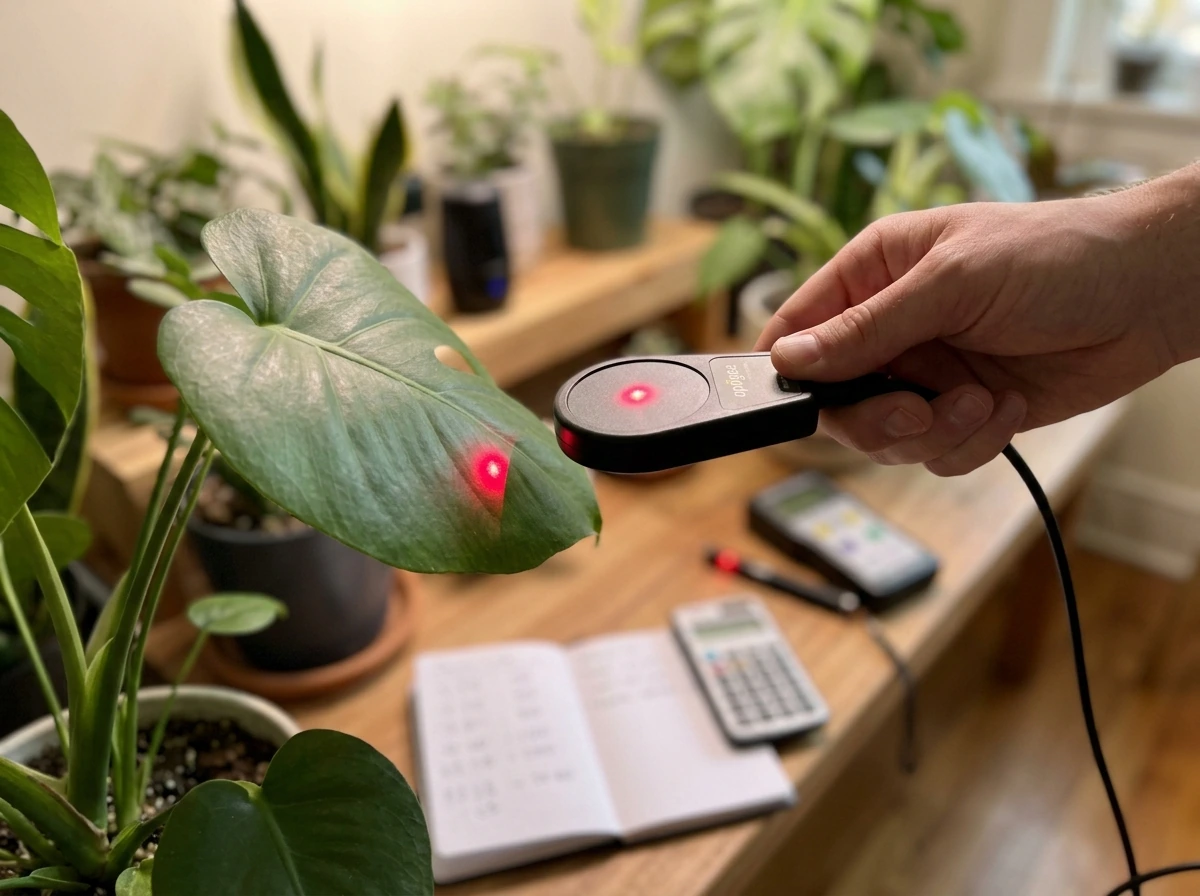
The Grow Laser Cap 280 is priced in the range where you could buy a solid 100W horticultural LED panel from a reputable brand. The Illumiflow 148, a competing hair laser cap, is listed at $799 (discounted from $999). At that price point, you could purchase a high-efficacy LED grow light delivering 200 to 300 µmol/s of photosynthetically active radiation, with a published PPFD map, five-year warranty, and dimmer control. There is no meaningful $/PPF calculation possible for the laser cap devices because they publish zero horticultural output data. The fluence metric (J/cm²) they use is a medical/therapeutic measurement, not a photosynthetic one.
Long-term, LLLT hair devices have a different durability profile than grow lights. They are designed for intermittent use in a controlled indoor environment (scalp contact), not continuous-duty operation in a humid grow tent. Heat is minimal given the low total power, but the power bank and diode longevity are rated for therapy use, not 12 to 18 hours of daily horticultural operation. Grow Laser Cap offers a 12-month satisfaction guarantee, which is standard for consumer electronics but shorter than the two to five year warranties common on quality horticultural LED fixtures.
Red Flags and Common Mistakes to Avoid
Whether you're evaluating laser cap products for hair use or got here looking for plant lights, several red flags apply across both categories.
- No PPFD or PAR data: Any product marketed to indoor gardeners that cannot provide a PPFD map or PPF (µmol/s) rating is not a legitimate grow light. Period. The laser cap products publish none of this because they are not grow lights.
- Fluence (J/cm²) is not a plant metric: If a product uses fluence or milliwatts as its primary performance claim in a gardening context, that's a sign it's either a therapeutic device being mislabeled or a manufacturer that doesn't understand horticultural lighting.
- 650 nm alone is not full-spectrum: Red-only light at 650 nm will not sustain healthy plant growth. Any product claiming otherwise is misleading you.
- Diode count as a quality proxy: Both hair laser caps and some low-quality grow light products use high diode counts as a marketing hook. Diode count means nothing without published efficiency (µmol/J) and PPFD measurements.
- Expecting laser cap output to cover a grow space: Even if you wanted to use a hair laser cap over a plant, the beam coverage is scalp-sized (roughly 170 to 200 cm²). A single plant pot requires far more uniform coverage than this device can provide.
- Imposter and counterfeit products: Grow Laser Cap itself warns about 'imposter' products making unverifiable claims. The same skepticism applies in the grow light market, where knockoff panels with fake PPFD specs are common. Always verify third-party testing.
- Assuming FDA clearance equals horticultural performance: FDA clearance for a laser hair device confirms it met safety standards for medical use. It says nothing about photosynthetic effectiveness or plant-growth suitability.
- Overpromising marketing claims: Both Grow Laser Cap and its competitors warn against claims like 'all my lost hair back.' In grow lights, the equivalent is watt-equivalent claims ('1000W equivalent') without actual PPFD data. Treat both with the same skepticism.
The most practical next step if you're an indoor gardener: close the laser cap tab and search for grow lights by your actual grow space dimensions and target PPFD for your plant type. ...search for grow light reviews and brand comparisons on this site are organized by wattage, coverage area, and spectrum type, which is the framework that actually maps to plant outcomes. If you did genuinely want the hair loss device, the Grow Laser Cap 280 and GrowPro 302 are the two most-compared models, and the brand's own FAQ is honest about what it can and cannot deliver, which is more than you can say for many competitors in that category.
FAQ
I already own a laser cap, can I use it as a supplemental grow light for seedlings or herbs?
In practical terms, no. The device is engineered for 3 to 5 mm tissue penetration in scalp contact use, and it does not publish plant-relevant PPFD or spectrum distribution. If you want supplemental light, choose a red LED bar or a red-heavy grow panel that lists PPF/PPFD at canopy level, then add it at the correct height and distance.
If the cap uses 650 nm red light, why won’t plants grow under it like red LED panels do?
Wavelength alone is not enough. Grow panels deliver enough photon flux across a larger area and include blue and often far-red to prevent weak, elongated growth (etiolation). Hair caps also have much lower total optical output spread over a small area, so they cannot reach the light compensation point at typical mounting distances.
What measurements should I look for when comparing a laser-style product to a horticultural grow light?
For plants, prioritize PPFD maps (at canopy), spectrum distribution, and actual fixture output like PPF (or at least photon flux metrics). Avoid medical metrics like J/cm² fluence, because they do not translate cleanly to photosynthesis in a canopy context.
Could beam angle or distance make a difference, so the laser cap works closer to the plants?
Even if you place it very close, you still face two issues: there is no published intensity falloff or beam geometry for horticulture use, and the total output is too low to provide tens to hundreds of µmol/m²/s at canopy. For safety and results, use horticultural fixtures designed for open-air canopy illumination.
Is 650 nm red-only light completely useless for plants?
It is not useless, but red-only lighting is usually inadequate long-term for healthy vegetative growth. A common approach is to use a full-spectrum fixture, or at minimum combine blue (around 450 nm) with red (around 660 nm) so plants develop compact structure and adequate photosynthetic efficiency.
How do I estimate whether I’m buying enough light for my grow space if I’m not sure what PPFD to target?
Start by matching your plant type and growth stage to a PPFD range, then confirm the fixture’s PPFD at your planned hanging height. If a product only lists wattage without PPFD or coverage-area maps, treat it as a weak fit and choose a fixture that shows canopy-level measurements.
Can I control the laser cap with my grow tent timer, dimmer, or smart plug schedule?
Not in a meaningful way. The cap is designed to run from power bank or an AC adapter with an internal 30-minute shutoff, and it does not provide horticultural control features like dimming, external drivers, or programmable intensity changes. For grow lights, you want fixtures that integrate with your timer and dimmer/driver controls.
Are laser cap devices safe around plants in a humid grow tent?
The optics and total power are low, but the bigger limitation is operating design. These devices are intended for intermittent, scalp-contact therapy, not continuous-duty use in a humid environment. If you try it at all, do not rely on it for plant outcomes, and consider moisture and power-bank/adapter specifications for electronics durability.
What’s the best alternative if I specifically want more red light (650 to 660 nm) for flowering?
Look for dedicated red supplementation that publishes PPF and PPFD or at least provides spectrum and photometric output. Red LED bars or red-heavy grow panels are the practical options because they are measured for canopy delivery, and you can integrate them with your main full-spectrum setup.
How should I compare prices fairly, since laser caps list fluence in J/cm²?
Use horticultural comparators like $/PPF or coverage-weighted cost based on published PPFD maps and warranty. Laser caps do not publish plant-output metrics, so any price-to-output comparison is not valid. If two products do not share plant-relevant metrics, compare by actual fixture capability, not fluence.