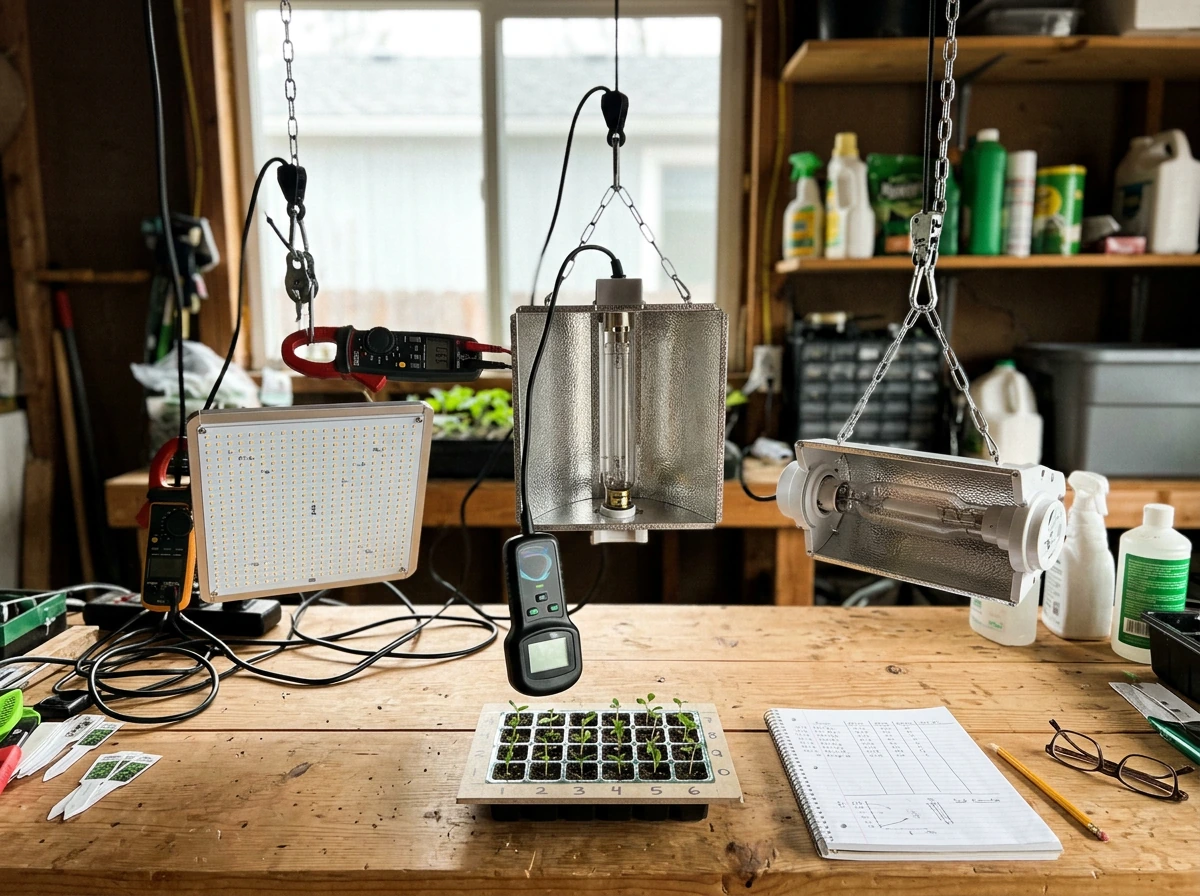
The right reflector won't make a weak grow light powerful, but the wrong one will absolutely waste a good one. That's the core thing to understand before you start comparing options. A reflector reshapes where photons go, it doesn't manufacture new ones. So the question isn't 'which reflector gives me more light?' It's 'which reflector puts the light I already have where my plants can actually use it?' That distinction drives every useful comparison in this guide.
Grow Light Reflector Comparison: How to Choose for Best PPFD

Marcus Caldwell
24 Mar 2026
What a grow light reflector actually changes (and what it doesn't)
A reflector's job is beam shaping and light redistribution. Photons that would otherwise scatter sideways, bounce off your walls uselessly, or hit the floor between plants get redirected downward into the canopy. The efficiency gain isn't about total output, it's about usable output at the canopy. This is the difference between lumens produced by the source and lumens actually landing in your grow footprint per degree of solid angle, which is exactly how reflector efficiency is measured in optics design. You're capturing angular waste.
What a reflector doesn't change: total photon output (PPF) from your bulb or diodes, the spectrum of that light, or the heat load from the source itself. If your HPS is pulling 600 watts, it's still pulling 600 watts with a polished parabolic hood on it. What changes is what percentage of those photons find a plant leaf versus your tent wall or the ceiling above the hood. A well-matched reflector on a 600W HPS can increase usable canopy PPFD meaningfully compared to a bare bulb or a poorly shaped hood, without changing wattage at all.
Reflectors also affect heat distribution (not heat generation), glare direction, and light spill outside your intended footprint. In a tent, spillage mostly means light bouncing back from reflective walls, which is actually useful. In an open room or shared space, uncontrolled spill is a real problem. These factors matter for both performance and safety, and I'll get into both later.
The main reflector types and when each one makes sense
There are more reflector styles marketed than there are meaningful performance differences between them, so here's a practical breakdown of the types that actually matter in a hobbyist or small-cultivator context.
Bare bulb or bare LED (no reflector)
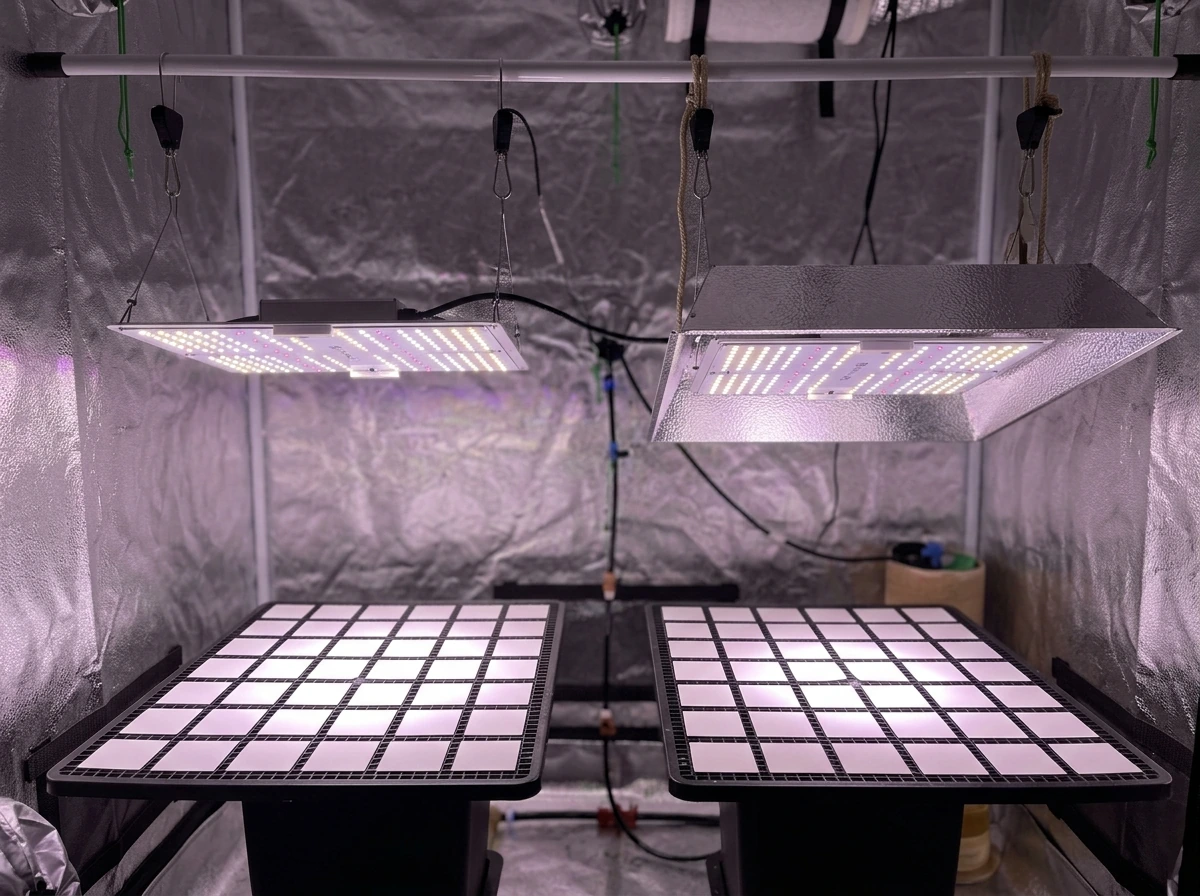
Running a bulb or LED board without a dedicated reflector gives you a wide, omnidirectional spread. In a highly reflective tent (95%+ Mylar or white poly), bare bulb HPS can actually perform well because the walls do the reflecting. Some experienced growers intentionally run bare bulb DE HPS for this reason, especially in square tents where wall reflection contributes meaningfully to canopy uniformity. Bare LED boards or strips behave similarly, with wide beam angles that can produce very even canopy coverage at the right mounting height. The downside: you lose directional control, and in any space that isn't tightly lined with reflective material, efficiency drops sharply.
Standard hoods and wing reflectors
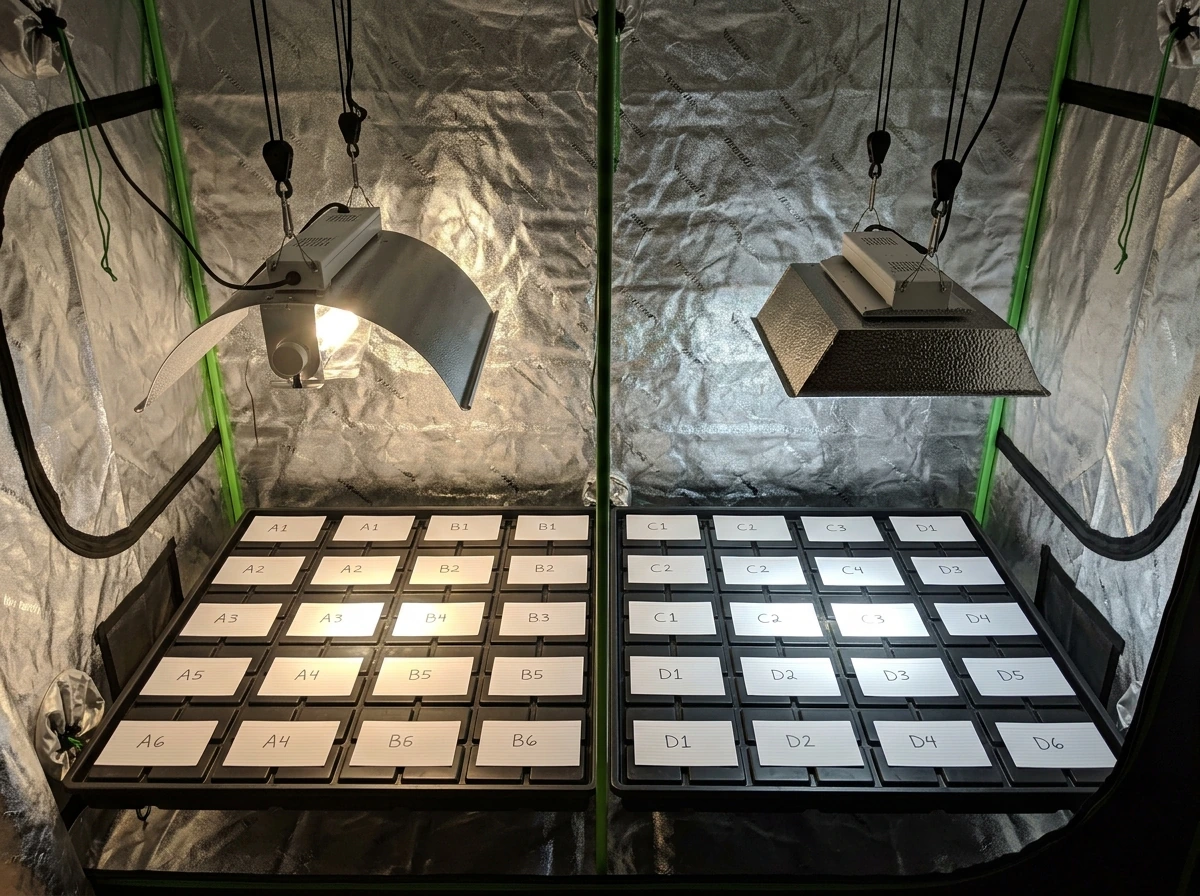
These are the most common reflector type for HPS and CMH. A basic wing or euro-style hood uses a curved or angled aluminum or steel reflector to push light downward in a roughly oval or rectangular pattern. They're affordable, widely available, and get the job done for rectangular footprints. Dimpled or hammered aluminum finishes scatter light slightly, which can reduce hot spots. Smooth, highly polished finishes focus more tightly but can create uneven PPFD across the canopy if your mounting height is too low.
Parabolic reflectors
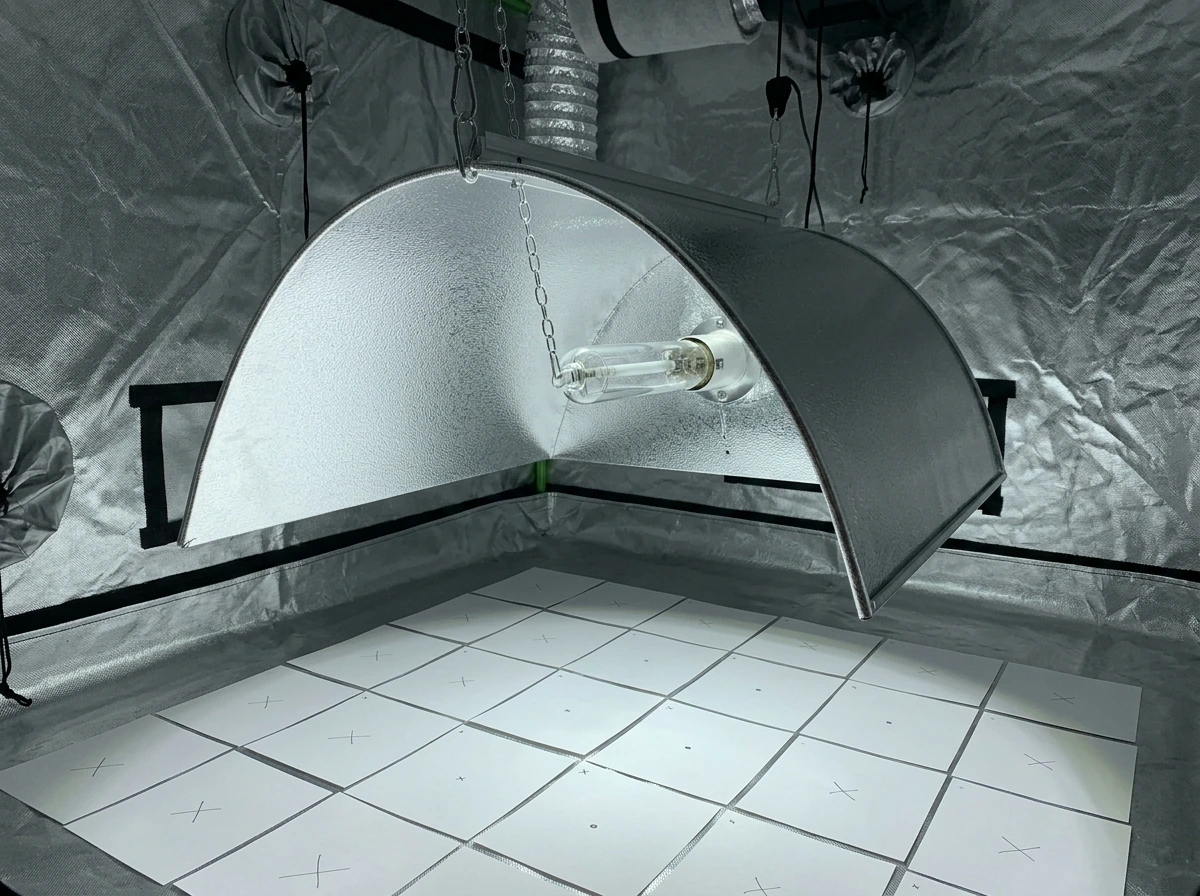
Parabolic hoods (like the classic large-diameter parabolic HPS reflectors) use a curved geometry to produce a wider, more even spread. The bulb sits near the focal point of the parabola, and the geometry naturally distributes light more uniformly across a larger footprint compared to a flat or simple curved wing. These tend to shine at higher mounting heights, where the wider beam angle fills a larger canopy area without the hot spot you'd get from a tighter hood close to the canopy. They're bulkier and heavier, but for 4x4 or larger footprints with HPS or CMH, they're hard to beat on uniformity.
Air-cooled and enclosed glass hoods
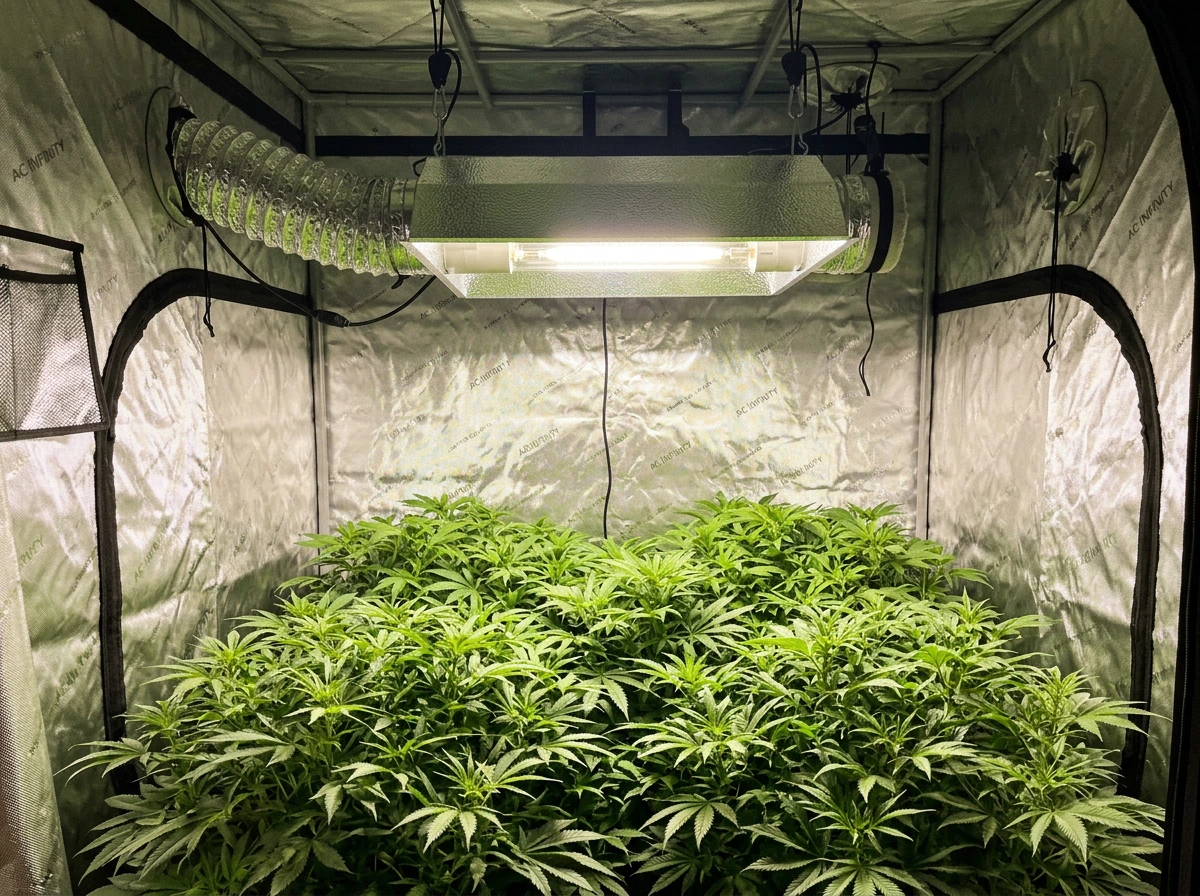
These hoods add a glass panel below the reflector, allowing ducted air to pass through and pull heat away from the bulb. The glass reduces the amount of infrared heat radiating toward the canopy, which lets you hang closer and potentially increase PPFD at the canopy. The trade-off: glass absorbs a small percentage of PAR (roughly 5-10% depending on glass type and cleanliness), so you're trading some light for thermal control. In hot environments or sealed rooms where heat management is critical, that trade-off is often worth it. For cooler setups, an open reflector typically delivers more usable PAR.
LED-integrated optics and secondary lenses
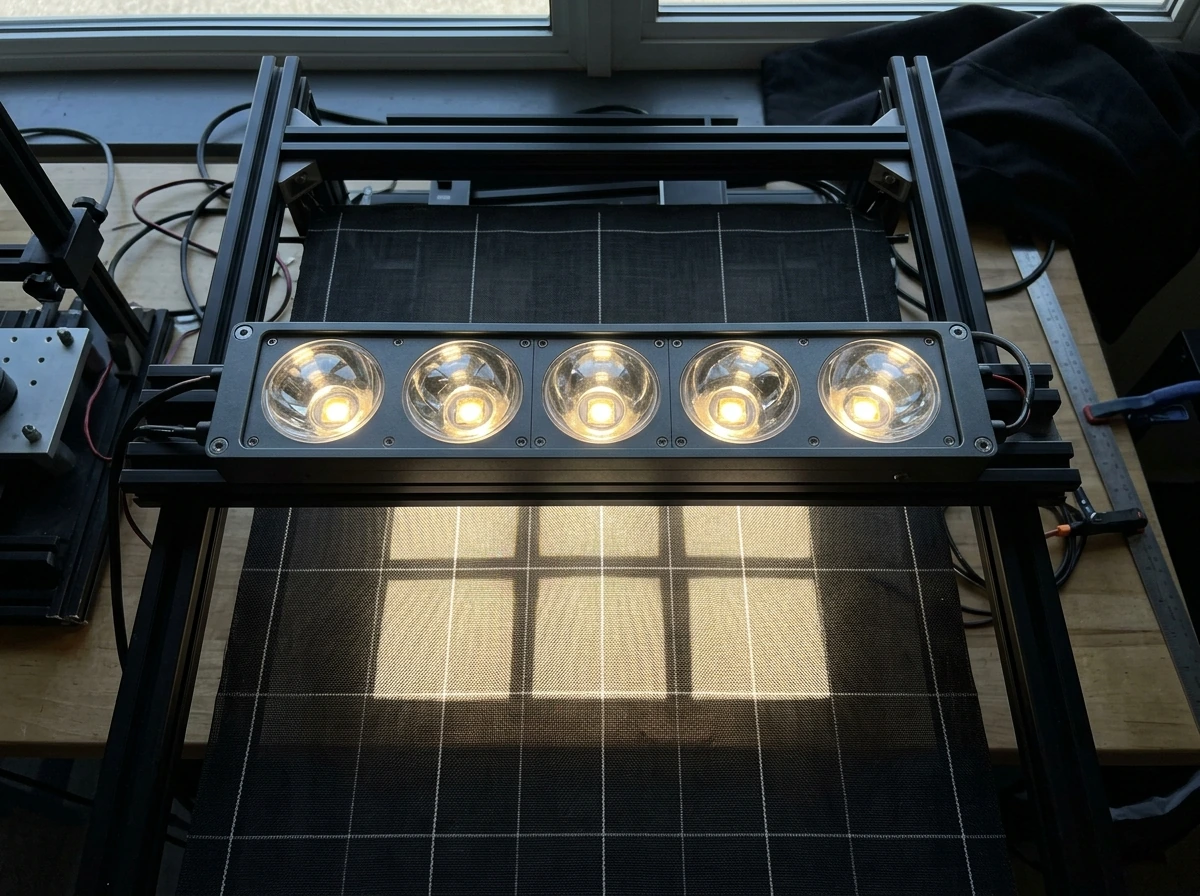
Most modern LEDs don't use traditional hood-style reflectors at all. Instead, they use primary optics built into the diode package and secondary lenses or reflector cups molded directly into the fixture. These control beam angle at the chip level, usually producing 90-120 degree beam angles for broad coverage or tighter 60-degree lenses for penetration applications. Some commercial LED fixtures allow interchangeable lens systems. For most hobbyists, the lens/optic system is fixed and non-changeable, so reflector comparison for LED is really about choosing between fixture designs rather than swapping hoods onto a bare light.
How reflector choice affects PPFD, coverage, and uniformity
Two fixtures with identical PPF (total photon output) can produce dramatically different canopy results depending on reflector geometry. This is one of the most important things to internalize before shopping. Two lights can report the same average PPFD across a footprint but have completely different spatial distributions, with one creating a bright center that fades fast toward the edges and the other delivering a much flatter, more even spread. Hot spots push center plants into light saturation while edge plants stay light-starved, and this hurts yields even when average PPFD looks fine on paper.
Uniformity is typically expressed as a ratio of minimum to average PPFD across a measurement grid. A ratio above 0.7 (meaning the lowest-reading point is at least 70% of the average) is generally considered acceptable for most crop applications. A ratio above 0.8 is quite good. Parabolic hoods, properly positioned bare-bulb setups in reflective rooms, and wide-angle LED fixtures tend to score better here than tight-beam hoods or highly focused optics at low mounting heights.
Mounting height is the other variable that interacts directly with reflector geometry. Raising your light increases coverage area but decreases PPFD at the canopy (intensity follows the inverse square law). A parabolic hood designed for higher hanging distances will produce worse uniformity if you mount it too low, and a tight wing reflector mounted too high will waste light on walls. Matching your reflector type to your intended mounting height is as important as the reflector material itself.
For measuring canopy uniformity at home, the practical standard is to take PPFD readings at a 15x15 cm grid across your canopy plane using a calibrated quantum sensor, then calculate the average, minimum, and uniformity ratio. This is exactly the kind of grid-based approach used in standardized grow light testing protocols, and it gives you real data rather than relying on manufacturer claims.
Reflector comparisons by light type: HPS/CMH vs LED
Reflector behavior and what's worth comparing changes significantly depending on whether you're using a discharge lamp (HPS or CMH) or a modern LED fixture. These two categories don't play by the same rules.
HPS and CMH reflectors
HPS and CMH bulbs are omnidirectional point sources. They emit light in all directions, so a reflector is doing heavy lifting to capture the roughly 50% of photons emitted away from the canopy and redirect them downward. The reflector material matters a lot here. Vega-polished aluminum reflects around 95% of incident light, while standard brushed aluminum might be 85-90%, and painted steel can drop below 80%. Over a 1000W lamp, that 10-15% difference in reflector efficiency is the difference between 100-150 watts worth of photons reaching your canopy or being lost. For HPS especially, invest in quality reflector material, not just shape.
CMH (ceramic metal halide) produces a fuller, more balanced spectrum than HPS, but behaves similarly as a point source in terms of reflector requirements. One difference worth noting: CMH bulbs are more sensitive to the operating position specified by the manufacturer (horizontal vs vertical), and some reflectors are designed specifically for horizontal burn, so verify compatibility before buying a reflector for a CMH conversion.
LED reflectors and optics
LEDs are directional sources to begin with, typically emitting into a hemisphere. This means they lose less light upward compared to HPS, and an external reflector hood adds less incremental value. Most high-quality LED fixtures are designed as complete optical systems where the diode placement, board layout, and integrated optics are engineered together. Adding an aftermarket hood to an LED bar or board fixture often does more harm than good by creating unintended reflections and reducing thermal dissipation from the board's passive heatsink.
For LED, the relevant 'reflector comparison' is really about choosing fixtures with the right beam angle and optical design for your application. A fixture using narrow 60-degree secondary lenses will penetrate deeper into a dense canopy and suit tall plants, while a fixture with wide 120-degree optics or a bare diode design suits low-profile crops or SCROG setups where even surface coverage matters more than penetration.
| Feature | HPS/CMH with Hood Reflector | LED with Integrated Optics |
|---|---|---|
| Light source type | Omnidirectional point source | Directional surface source |
| Reflector function | Captures and redirects ~50% of upward/sideways photons | Fine-tunes beam angle and coverage; less critical for capture |
| Material quality impact | High (reflectivity directly affects usable PPF) | Low to moderate (optics built in; material mainly affects aesthetics/durability) |
| Best reflector style | Parabolic (wide coverage) or air-cooled hood (heat-sensitive rooms) | Wide-angle integrated optics or bar/quantum board layout |
| Uniformity control | Reflector geometry + mounting height | Optic design + fixture layout + mounting height |
| Aftermarket reflector swaps | Common and impactful | Rarely useful; may cause issues |
| Heat management role | Air-cooled glass hoods reduce canopy heat stress | Passive heatsinks handle thermal; glass hoods not applicable |
| Spectrum relevance | CMH delivers fuller spectrum; HPS is red-heavy regardless of reflector | Spectrum is fixed by diode selection; reflector doesn't alter it |
Choosing the right reflector for your specific grow space
Before you compare products, nail down four numbers: your ceiling-to-canopy distance, your intended footprint dimensions, your target PPFD at canopy, and whether you're growing tall plants (needing light penetration) or short, bushy crops (needing surface uniformity). Every reflector decision flows from these.
Small tents (2x2 to 3x3)
In small tents, wall reflection does a lot of the work for you. A good quality white-walled or Mylar tent with a relatively simple reflector, or even a bare LED board, can achieve solid uniformity because stray light bounces back from the walls at close range. Tight-beam hoods or parabolic reflectors designed for larger footprints will create hot spots in this scenario. Opt for wider-angle optics or simple wing-style reflectors with a diffused finish. Mounting height control matters more here than reflector geometry.
Medium tents and rooms (4x4 to 5x5)
This is where parabolic hoods earn their reputation for HPS/CMH. A large parabolic reflector at 18-24 inches above canopy will cover a 4x4 footprint with much better uniformity than a standard wing hood at the same height. For LED in this range, a quality quantum board or multi-bar fixture with wide-angle optics typically does well without any additional reflector hardware. If you're using an older COB LED setup, check whether the manufacturer offers an optional secondary reflector or lens kit.
Larger rooms and multi-light setups
Once you're covering 6x6 or larger, single-fixture reflector design matters less and fixture spacing matters more. Overlapping coverage from adjacent fixtures naturally smooths out the uniformity issues that a single reflector's geometry creates. In multi-light rooms, a mid-range wing reflector or standard LED bar fixture often outperforms an expensive parabolic hood because the interaction between fixtures does more for uniformity than any single reflector shape. Focus your comparison effort on consistent fixture placement and inter-fixture spacing rather than premium reflector geometry.
Tall plants vs. low canopy crops
If you're growing tall plants like indeterminate tomatoes or cannabis in a stretch phase, light penetration through the canopy matters. Tighter beam angles (either through reflector geometry or LED optics) focus PPFD at the top of the canopy and let more light push downward through the foliage. For low-profile crops like herbs, microgreens, or plants trained in a SCROG net, wide-angle distribution and high surface uniformity are more valuable than penetration depth. Choose your reflector geometry accordingly.
How to measure and compare reflector performance fairly before buying
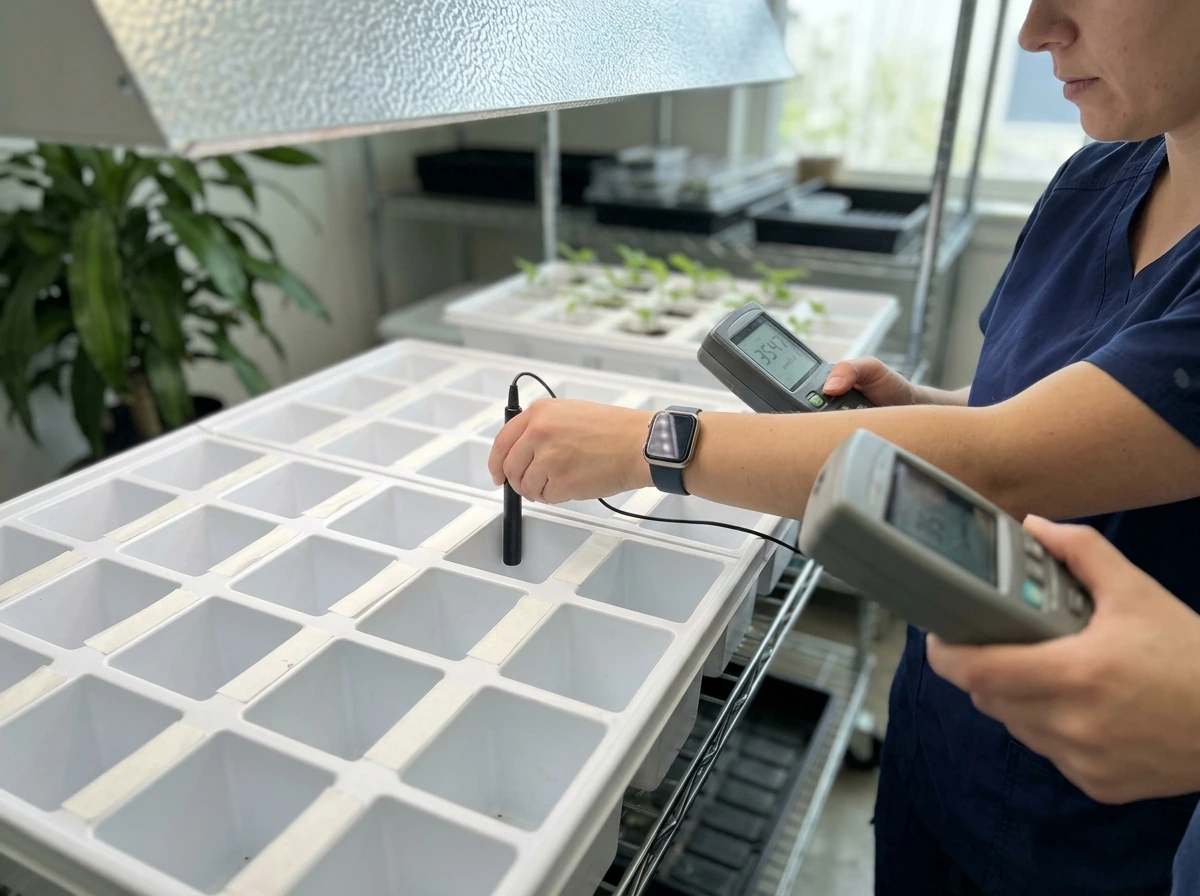
The most common mistake in reflector comparisons is treating manufacturer PPFD claims as directly comparable between products. They're often measured under different conditions: different room sizes (or no room at all, which removes any wall-reflection contribution), different measurement heights, different grid resolutions, and sometimes just a center-point reading rather than an average. To compare fairly, you need to look for claims that specify the canopy footprint measured, the hanging height, the measurement grid density, and whether the measurement was taken in an open field or a reflective room.
For at-home verification, a calibrated quantum PAR sensor (apogee MQ-500 or similar) and a systematic grid measurement is your best tool. Take readings at each intersection of a 15x15 cm grid at your actual mounting height, in your actual grow space. Average them, find the minimum, and calculate the uniformity ratio. Do this for every reflector or fixture you're evaluating, under the same conditions. That's the only apples-to-apples comparison that matters.
When reading third-party reviews and test data, look for evaluations that reference optical performance characteristics rather than just raw average PPFD or lumen output, then cross-check that with grow light reviews 2021 for real-world context. A fixture's ability to deliver consistent PPFD across a canopy plane tells you far more about real-world plant results than a single center-point peak reading. This is why standardized testing frameworks in the lighting industry evaluate fixtures on spatial distribution, not just total flux, and the same principle applies when you're comparing grow light reflectors.
If a product review (...including the best grow light reflector reviews on this site...) shows you the full PPFD map or uniformity data alongside the average, that's the number to trust. If it only shows peak center PPFD, mentally discount it for uniformity comparisons. grow light science progrow 1800 review
Common mistakes, heat and safety considerations, and a quick decision checklist
Mistakes worth avoiding
- Assuming a better reflector means more total output: it doesn't. It redistributes existing photons more efficiently toward the canopy. Your PPF ceiling is set by the source.
- Mounting HPS/CMH too close after adding an air-cooled hood: the hood reduces radiant heat but doesn't eliminate it entirely, and PPFD increases close in can exceed plant saturation points for some species.
- Using a reflector designed for a different footprint size: a 4x4-rated parabolic in a 2x2 tent creates severe hot spots. Match reflector coverage spec to your actual grow area.
- Ignoring reflector aging: polished aluminum oxidizes over time, losing reflectivity meaningfully over 1-3 grow cycles. Clean reflectors regularly and replace them if they've lost their polish.
- Comparing PPFD numbers from different room conditions: a 1000 umol reading in a 4x4 reflective tent is not the same as 1000 umol in an open-field lab test. Room walls contribute 10-30% of canopy PPFD in real-world conditions.
- Adding aftermarket hoods to LED fixtures: most modern LED designs dissipate heat through the top of the fixture; covering them disrupts airflow and can cause thermal throttling or premature failure.
Heat and safety
HPS hoods get extremely hot during operation, often 200-300°F on the reflector surface near the bulb socket. Maintain at least 6 inches of clearance from any flammable material, including tent walls. Air-cooled hoods with active ducting reduce this risk considerably since heat is evacuated through the duct rather than radiating into the grow space, but the duct itself will carry hot air and needs proper routing. Never block or restrict the airflow through an air-cooled hood duct while the light is running.
Light spill from open-bottomed reflectors in shared spaces (basements, garages, shared rooms) can cause problems ranging from disrupted photoperiods in adjacent plant areas to light pollution affecting neighbors or household members. If spill is a concern, enclosed hoods or tents with light-tight zippers solve the problem more reliably than trying to manage it with reflector geometry alone.
Decision checklist before you buy
- What is your light source type? (HPS, CMH, or LED) — This determines whether an external reflector makes sense at all, and what geometry to look for.
- What is your grow footprint? (in feet or meters) — Match the reflector's rated coverage area to your actual space.
- What is your ceiling-to-canopy distance? — Verify the reflector's optimal hanging height range matches your room constraints.
- Are you growing tall plants or low canopy crops? — Tall plants benefit from tighter beam angles; low canopy benefits from wide-angle uniformity.
- Is heat management a priority? — If yes, factor in air-cooled hood options for HPS/CMH and consider their PAR transmission penalty.
- What is your room reflectivity? — Bare walls lose 50-70% of stray light; white paint recovers 80-90%; Mylar recovers 90-95%. This affects how much a reflector matters in your specific setup.
- Have you confirmed the reflector material and finish rating? — Look for specular aluminum with 90%+ reflectivity for HPS/CMH applications.
- Do you have a way to verify PPFD at home? — If not, prioritize products with full canopy PPFD maps from independent reviews rather than manufacturer center-point specs.
- Are you comparing products under the same measurement conditions? — Discount any comparison that mixes open-field and reflective-room measurements.
- Does the reflector match your specific bulb's burning position and socket type? — Especially important for CMH; verify before ordering.
If you work through that checklist before browsing products, you'll eliminate 80% of the options that don't fit your setup and make the remaining comparison much more straightforward. The goal isn't finding the 'best' reflector in the abstract, it's finding the one that puts the most usable PPFD at your canopy, evenly distributed, without cooking your plants or your budget. That answer depends almost entirely on the specific details of your grow, not on which product has the most impressive marketing numbers.
FAQ
Do I need a reflector if my grow tent is already very reflective (like Mylar or white walls)?
You might not, especially for bare-bulb HPS in a fully lined tent, where wall bounce can do a lot of the work. However, you should still check uniformity at your actual mounting height, because a “good enough” center reading can hide edge starvation. If your uniformity ratio is below about 0.7, adding or changing reflector geometry can help, even in reflective tents.
Can I use the same reflector for both HPS and CMH bulbs without changes?
Not always. Some CMH bulbs require specific operating orientation and designed reflector behavior (horizontal versus vertical). Even if the bulb physically fits, a mismatched reflector and burn-position can change how efficiently photons are redirected, which will show up as poorer edge PPFD and worse uniformity.
How far above the canopy should I mount a parabolic hood versus a wing-style hood?
Follow the reflector’s intended mounting design, then confirm with grid measurements. As a rule of thumb from optical behavior, parabolics tend to hold uniformity better when mounted higher, while tighter wing hoods often lose uniformity when raised too far (they start wasting light on walls). The only reliable method is measuring at your planned height and checking the minimum-to-average PPFD ratio.
Is higher average PPFD always better, even if there are hot spots?
No. Hot spots can saturate top leaves while nearby plants or lower canopy layers receive less than the target. For most setups, prioritize uniformity (minimum PPFD) over peak PPFD, especially for crops where canopy thickness and plant spacing vary. If you are running a dense canopy, penetration also matters, but distribution still controls yield consistency.
What should I do if my reflector comparison shows identical average PPFD but different uniformity?
Pick the one with better uniformity, assuming the test conditions match your setup. Manufacturer “average” claims can be misleading, so uniformity often predicts real-world outcomes better than center-point numbers. If the product doesn’t provide a PPFD map or a uniformity metric, treat the comparison as uncertain and verify with your own grid test.
Does a polished or dimpled reflector finish always outperform a matte one?
Not necessarily. Polished finishes generally reflect more efficiently, but they can also concentrate light and create sharper gradients if the mounting height is too low or your footprint is small. Dimpled or hammered finishes can reduce hot spots by scattering, which can improve uniformity even if peak efficiency is slightly lower. The best choice depends on whether you are fighting hot spots or edge weakness.
If I add a glass panel (air-cooled, hood-with-glass), will I lose too much PAR to be worth it?
It depends on your temperature constraints. Glass typically reduces PAR by a measurable single-digit percentage, while mainly improving thermal control, which can allow you to hang closer safely. If your room runs hot or your canopy is heat-stressed, the ability to reduce mounting distance can compensate for the PAR absorption. If temperatures are already fine, an open reflector may deliver more usable PAR.
Can I attach an aftermarket hood or secondary reflector to an LED board to improve performance?
Often, you should not. Many LED fixtures are engineered as an integrated optical and thermal system, with specific diode placement and built-in optics. Adding external reflectors can create unintended reflections, increase glare, and can worsen heat dissipation if it blocks airflow around the heatsink. For older COB setups, only use manufacturer-approved lens or reflector kits, since they are designed to match the emitter geometry.
How do I compare reflector efficiency between products when the tests are done in different rooms?
Use only claims that specify the measurement footprint, mounting height, and how PPFD was sampled across a grid, including whether wall reflections were present. If the test is done in an open field or a non-reflective setup, the reflector’s real-world advantage in a reflective tent may be smaller (or larger) than the marketing implies. When those details are missing, assume the comparison is not apples-to-apples.
What PPFD grid spacing should I use for at-home verification, 15x15 cm or something smaller?
Start with 15x15 cm like the common grid approach described in the testing logic, then consider smaller spacing only if your light is tightly focused or your plants are very close together. Smaller grids can reveal micro hot spots that a coarse grid misses, but they also increase workload. If you are deciding between two reflectors, consistent grid spacing across both tests is more important than the absolute grid size.
Do I need to measure both the top and lower canopy, or only the canopy plane?
Canopy-plane measurement is the minimum you should do for reflector comparison, but it may not reflect what plants experience throughout a thicker canopy. If you are growing tall plants or running a dense canopy, add at least one measurement depth lower than the canopy surface, or use plant response over time to confirm penetration and distribution. Reflector choices that look similar at one plane can diverge in how they light interior leaves.
Is light spill mainly a reflector problem, or is it a setup issue?
It’s mostly a setup and containment issue. Reflector geometry influences where light goes, but open-bottom reflectors can still send significant spill outside the footprint, especially in basements and shared spaces where adjacent areas matter. If spill affects photoperiod control or neighbors, enclosed hoods or properly sealed tent openings are more reliable than relying on reflector shape alone.
How much clearance do I really need for HPS hoods, and does ducting change the rule?
Maintain conservative clearance from flammables, at least the commonly recommended several inches beyond the hood’s hottest surfaces, and more if your grow environment is crowded. Air-cooled hoods reduce radiant heating toward the grow space because hot air is exhausted through ducting, but the duct carries hot air that must be routed safely. Never restrict the duct while the light is on, because airflow reduction can turn a safer design into a hotter one.